
How to make a long scenic drive more interesting.
A scenic drive can still feel long when the road stretches for hours between major stops. The answer is not to fill every minute. It is to give the trip a rhythm: notice something, listen for a while, talk, stop, and let part of the drive stay quiet.
Prepare entertainment before departure and give passengers the active roles. The driver should not be searching for the next episode, landmark, or photo while the vehicle is moving.

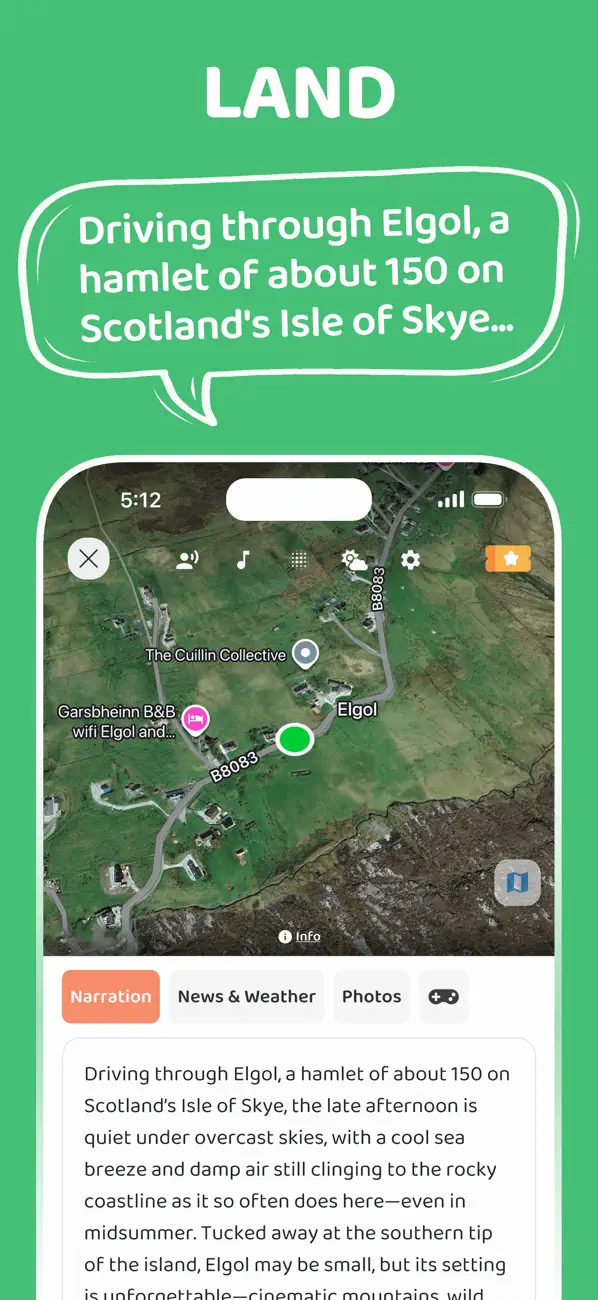
Start with questions the landscape can answer
- Why did the town grow beside this river, pass, or railroad?
- What changed when the landscape shifted from farmland to desert or forest?
- Which mountain range or watershed is shaping the route?
- What food, music, industry, or migration story belongs to this region?
- What would this road have felt like before the modern highway?
A question gives passengers something to look for without turning the windshield into a quiz. The point is curiosity, not getting every answer immediately.
Alternate listening instead of building one endless queue
One chapter or episode
Choose a natural stopping point, then leave time to talk or watch the route before starting something else.
A playlist with regional turns
Mix familiar choices with music connected to the state, city, or landscape. Prepare the queue before the vehicle moves.
Stories triggered by what is nearby
Route-based audio can make an unplanned town, landmark, or geological change feel like part of the day rather than empty distance.
Plan breaks before fatigue chooses them
NHTSA advises that adequate sleep is the only true protection against drowsy driving. Entertainment, coffee, and open windows do not replace rest. Switch drivers when appropriate and stop somewhere safe before attention falls.
A useful break has a purpose: fuel, water, a restroom, a short walk, a viewpoint, or a meal. Mark several realistic options before the trip instead of waiting for an emergency decision.
Let nearby places interrupt the plan in a good way
JollyTango can tell real-time stories about towns, landscapes, food, nature, culture, and landmarks around the route when internet access is available.
It does not replace navigation, road alerts, weather information, or safe stopping decisions. Let a passenger manage audio and use official tools for the parts of the drive that affect safety and timing.
Driver-fatigue, road-information, and audio-travel sources
Give the long road more to say.
Hear real-time stories about places around the drive when internet access is available.
Explore Road Trips